1) Making dashi.
2) Cooking the vegetables, fish, and other ingredients in the dashi.
3) Adding the miso just before serving.
Today we’ll be focusing on step 1–making the dashi. Dashi is a clear sea stock which doesn’t really even taste fishy at all when prepared correctly. This may sound intimidating, but if you stick with me, you’ll see how quick and easy it is! Dashi is much easier to make than other types of stock that you might be familiar with, like chicken stock. If you have the necessary ingredients (THREE!) and 20 minutes, you can make dashi. Some of the instant dashi granules aren’t too bad, but many of them contain MSG (monosodium glutamate) and other undesirable chemicals. Plus, once you’ve made dashi from scratch, you’ll never want to go back because the flavor is so much better and you’ll only be sacrificing a few extra minutes of time in the process.
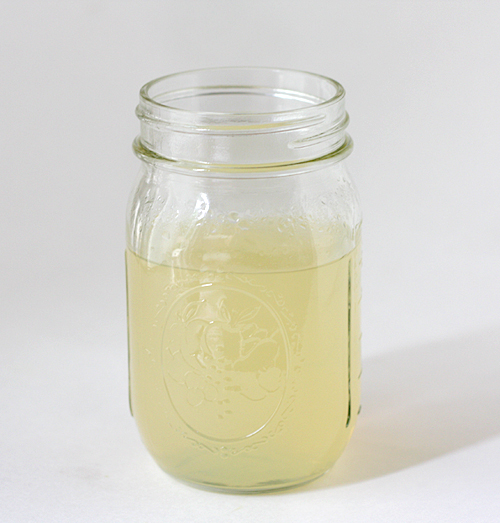
There are actually different kinds of dashi. Dashi can be made using one or more of these things: kombu (kelp), katsuobushi (dried bonito flakes), iriko/niboshi (dried baby sardines), and dried shiitake mushrooms. For the purpose of introducing you to homemade dashi, we’ll start with the most common combination, which is that of kombu and katsuobushi.
Kombu is a type of kelp that is harvested and dried in the sun. Kombu is rich with minerals, vitamins, protein, and dietary fiber. Kombu can be found in Japanese and Asian food stores and some natural-food stores. It can also be found online. Asian Grocer is a great place to look. Amazon.com also carries some options.
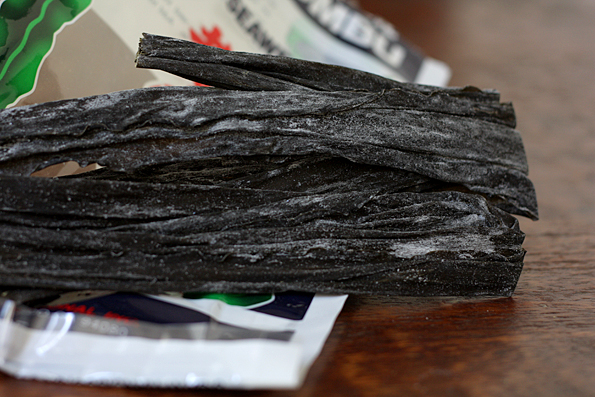
Katsuobushi, dried bonito flakes, are also rich in minerals, vitamins and protein. The flakes are made by shaving wispy thin flakes with a special tool from a bonito fish that has been filleted, boned, boiled, smoked, and dried in the sun.
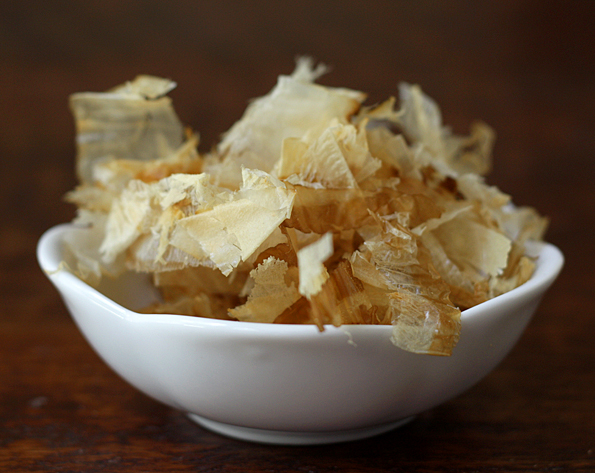
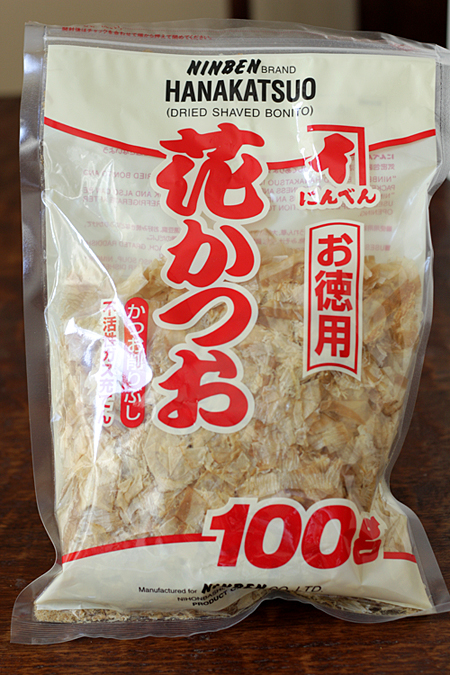
The flakes are wonderful and rich in smoky flavor. Like kombu, katsuobushi can be found in Japanese and Asian food stores, some natural-food stores, and online. Asian Grocer and Amazon.com both carry several options.
The first time you use your kombu and katsuobushi to make dashi, your dashi is called ichiban dashi, or “first sea stock.” You can then use that same kombu and katsuobushi again to make niban dashi, or “second sea stock.” Niban dashi has a less refined flavor and a cloudier appearance than ichiban dashi, but is still perfect for use in miso soups and a variety of other dishes, making homemade dashi very economical. It’s important to note that the ingredients should not be cooked longer than specified, otherwise the stock develops a bitter flavor and becomes cloudy. Also, if you are going to reuse the ingredients to make niban dashi, you should do it immediately after making ichiban dashi, as kombu and katsuobushi will spoil quickly once they have been cooked.
Making dashi is so easy because you really don’t have much to do—the ingredients do the work for you. You start out by soaking a piece of kombu in some water. You are basically steeping as much flavor as you can out of the kombu. So far so good, right?
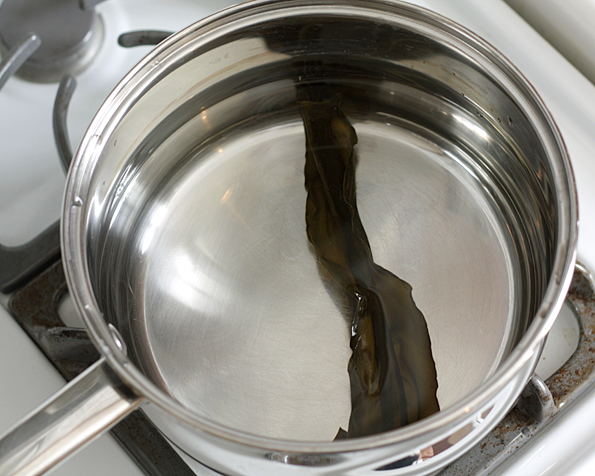
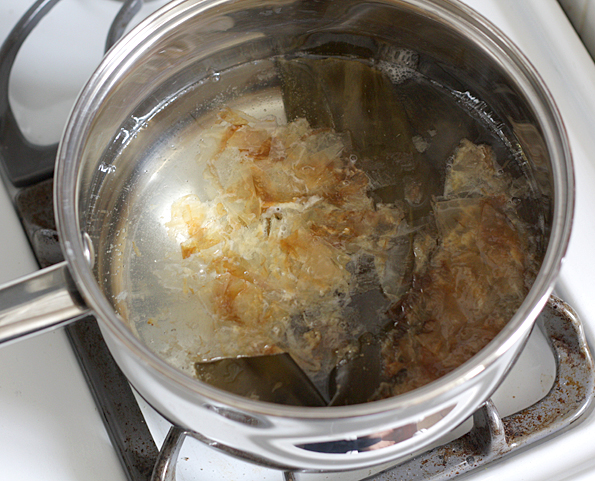
Next you put the pot with your water and kombu in it on the stove and cook it until just before the water starts to boil, and then you take it off the heat and add your katsuobushi, and let all of that sit and steep for a couple more minutes. You still haven’t really done a thing here….
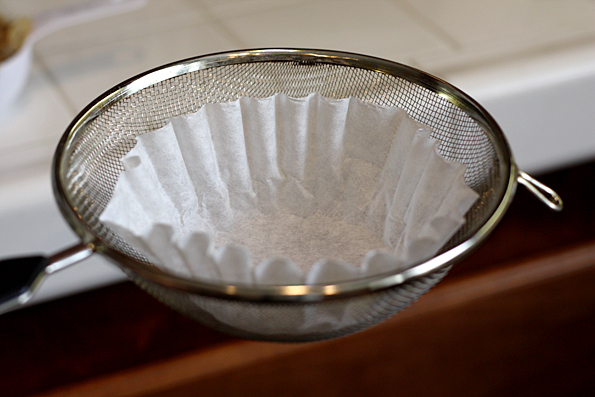
Then you pour the stock through a lined strainer (a coffee filter is my weapon of choice) into a clean container and it’s ready to use!
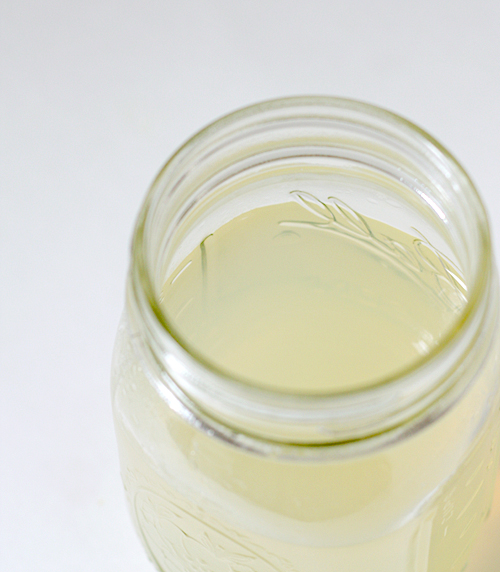
At this point you should be laughing because you are realizing how dead easy making dashi is. Niban dashi is even easier. You just throw all that kombu and katsuobushi back in the pot with some more water, simmer it over low heat for 10 minutes, strain the stock again, and you’re done!
 Print This Recipe
Ichiban Dashi (First Sea Stock)
Makes 4 cups
4 cups water
16 — 20 square inches of kombu*
1/2 cup loosely packed katsuobushi
1. Place the water and the kombu in a pot and let the kombu soak for about 15 minutes. Place the pot over medium heat. Right before the water starts to boil (watch for bubbles starting to break around the edge of the pot), remove the pot from the heat and scatter the katsuobushi over the surface of the water.
2. After 3 or 4 minutes (the katsuobushi will have sunk to the bottom of the pot by this point), strain the stock through a strainer lined with a tightly woven cotton cloth or a coffee-filter.
3. Refrigerate the stock in a tightly covered container for up to 4 days in the refrigerator.**
* If you would like to weigh out your kombu (I usually eyeball it)–somewhere between 0.45-ounces or 0.6 ounces (13-18 grams) is good! Of course, you can always go with more or less depending on your tastes.
** Sources disagree on whether ichiban dashi can be frozen. Some say that it can be frozen, while others argue that the stock loses its aroma/flavor when frozen, so it’s best to use it when it’s fresh. It’s up to you!
Niban Dashi (Second Sea Stock)
Makes about 4 cups
4 cups water
Kombu and katsuobushi used in ichiban dashi
1. Combine all of the ingredients in a pot. Place the pot over low heat and cook the mixture for 10 minutes. Remove the pot from the heat and then strain the stock through a strainer lined with tightly woven cotton cloth or a coffee-filter.
2. Refrigerate the stock in a tightly covered container for up to 4 days in the refrigerator.
================================================================
Coming Next: We will add ONE more ingredient to make the basic broth for miso soup. Any guesses? Hmmm…guess it wouldn’t be miso soup without the miso!




{ 47 comments… read them below or add one }
Next Comments →
That’s how my Japanese & Korean friends make their stock. :) But sometimes it’s hard to even find these in Asian store in some of the foreign cities we live in.
The Cooking Ninja– Yes, unfortunately ordering ingredients may be the only option for some people!
Who knew it was so easy ; )
Rachael, Awesome! I’ve seen both of those ingredients at my local Asian grocer. I’ll for sure be picking them up!
Diana– Excellent! I expect a full report! :) Better yet, take pictures of your trip to the grocer, etc. so we can enjoy your adventure too!
Coffee filter! Now I think you’re genius.
cocopuff1212– Hahaha, why thank you! Can I add that to my “official title”? :)
I’m finding these miso posts really interesting, I often see japanese ingredients in my local health food store but never know what to do with them. Now I’m getting an idea how to use them. I love japanese food but never really made it myself before.
I ran out of kombu, I need to buy some. I got some oden ingredients but no kombu to make dashi stock. It’s perfect to have oden in this crappy weather.
Sounds simple enough…. but those ingredients… whew. I am guessing my Tom Thumb might not have them. I will have to track down that grocery I told you about!
HUGS…can’t wait to see what’s next!
I didn’t know that dashi was that simple to make. I even have all of the ingredients at home! This post is very helpful!
Now you got me to want to get started immediately… but unfortunately, this is not the kind of products I keep handy in my kitchen (yet!). Will definitively go to an Asia supermarket to find them. Thanks!
This looks like something I can handle! I will have to find the ingredients so I can give this a try… Yum!
So this is how it is done! I can now make my own. I don’t have to groceries and buy some which are not that good tasting.
Wow – I am so intrigued that it’s so easy to make. And I am sure that I will be able to find those ingredients here in Chinatown… Thanks for posting Rachael!
Thank you so much for this! I usually only get REAL (vs instant) miso either at my mom’s house or a restaurant. It’s about time I started making it myself!
p.s. The coffee filter is genius!
Rachael, you’re my saviour! OK, so I must run (tomorrow, today I’m sick at home) to the shop and buy kombu and katsuobushi.. finally I understand their role in the plot, ah ah!
My ultimate miso soup is every day nearer!
It is really a lot easier than people think, and homemade is SO much better than the instant/granular dashi. Lovely write-up!
Never realised it was this simple, thanks for the recipe. Will have to try it out soon.
thank you so much for posting this recipe, now I can make my own dashi! I dont suppose you happen to know how many ounces of kombu 16-20 square is?
Thanks a bunch!
Kris– Just measured it out (I usually eyeball it)–somewhere between 0.45-ounces or 0.6 ounces (13-18 grams) is good! Of course, you can always go with more or less depending on your tastes. Hope that helps!
Just so you know, MSG isn’t the big bad boogieman of cooking that people have made it out to be. It’s just a harmless taste-enhancer that got framed for people’s “Chinese Restaurant Syndrome.” It really is ok to use MSG. It makes things taste better.
@abumaia, I suggest you read “Excitotoxins: The Taste that Kills” to find out just exactly what MSG does in your brain.
MSG used to be *made* from Kombu , so this recipe almost certainly contains just as much glutamate (what MSG turns into once dissolved) as the store bought kind. But as Abumaia suggests, I wouldn’t worry – if your body reacted badly to the stuff, you’d already know: glutamates are present in high quantities in seaweed, soy, tomatoes and parmesan cheese. (on the other hand, if Italian and Asian food make you ill, now you know why!)
Willow Tree is right, the whole realization of Glutamate aka MSG, came from Kombu, Katsuobushi, Shitake, Soy sauce etc. The very term Umami comes from the earthy flavor that glutamate products impart to other ingredients. MSG is a compound realized from what you get from the natural world. Sodium Chloride is still salt. Anything consumed to much is probably bad. Food without salt is considered unseasoned, too much and you retain water and other health issues. But without salt, animals and humans die. Salt was currency in the ancient world, hence “worth his weight in salt”.
When you get “uncured bacon” at Trader Joe’s it contains celery seed, another source of glutamate. You feel good because you don’t have MSG – but celery seed is full of it. It is a shell game.
The author of “Excitotoxins: The Taste that Kills” is Dr. Russell Blaylock. If his claims are accurate, then all of the people in Japan should have more of the diseases that he ascribes to MSG since Dashi which is full of Glutamate is the basis of so many of their dishes. Japanese population always seemed pretty healthy to me. Dr. Blaylock is also against vaccinations so there is a bit of controversy here. I don’t know if he is right, but he has his detractors.
This is a good link on the subject of Chinese Restaurant Syndrome, which is the first time the anti MSG meme became public. I remember it happening. http://tinyurl.com/lhkefab
Great tips! Thanks for the helpful post!
Totally bookmarking this post and printing it out. My mom just gave me 3 pounds of miso (she kinda buys in bulk even when she doesn’t have to), and I’ve been wanting to make miso soup without cheating. I’m fortunate enough to live close enough to a few Asian supermarkets, and now I know exactly what I need to pick up. Thanks!
This looks great! I think you’ve made it look quite easy. I’m in!
Great post! I’ll have to give it a try!
Great post! I love Japanese food but making it at home intimidates me a bit. Reading all of your posts makes seem much more doable! :)
You make Japanese cooking very approachable. I’ve always been a little too timid to try it. Ever since I started following your blog I’ve become so inspired!
This is such an interesting post, Rachael. You really make the process of making dashi sound easy.
I’ve made this stock before, not knowing what it was called, but I chop up the kombu and put it back in the soup. Then, I add the miso and sometimes some mushrooms and eat it that way. I figure the kombu is good for you, even if it has a rubbery texture. Do you ever make it this way?
First, thank you so much for deconstructing dashi…I cannot wait to give it a try. I do have a quick question for you though.
We are vegetarian, and I’d like to use shiitake instead of bonita flakes. Could you give me an estimate of how much (either by weight or piece) to use? Also, I assume you reconstitute the mushrooms directly in the hot water, i.e., we are not double boiling the mushrooms, is that correct?
Thanks again!
@Candees — I would use approximately 8 dried shiitake mushrooms (you can vary this greatly depending on your taste!). I would start by soaking the kombu (use the same amount) in water in a covered pot overnight for maximum flavor. Then about 30 minutes before you want to make your dashi, I would add the mushrooms to the same water to let them soak. After 30 minutes, put the pot over medium high heat. Right before the water starts to boil, remove the kombu, then let the liquid boil for about 3 minutes. Remove the pot from the heat and strain the stock through a strainer lined with a tightly woven cotton cloth or a coffee-filter. I then like to slice the shiitake mushrooms and use them in soup!
Thank you so much for posting this recipe! Can’t wait to try it. I have just ordered the ingredients through Amazon! THANKS!!!
I had no idea it was so easy. Thanks for the enlightenment.
Hello
Can i keep the dashi stock in the fridge?
Thanks.
@Esther, Yes! It will keep for about one week in the fridge.
First time attempting to make miso soup, and this was so easy and tasted great! though I put too much miso at first and was glad I had some more dashi left to even it up…haha
I am excited to try this. I went to my sushi place tonight and had a bowl. I am originally from Cali and miss all the great Japanese food I got there. I had forgotten how much I loved miso soup and once I was home I knew where to look for a recipe ;) I was wondering if you could freeze the dashi? I am going to have to order all my stuff online but am super excited to give it a go. I am sure it will become a staple here, thanks so much!!!
Thank you for posting the basic dashi recipe. Very easy and helpful!
Oh sure. That’s why whenever I eat anything with MSG in it I get phlegmy, lose my balance, get un-coordinated and generally feel like crap. No, its marvellous stuff MSG. Everyone should eat loa
ds of it, all the time. Everyone I don’t like, anyway.
Very helpful instructions! Any idea how long dashi lasts in the fridge? I’m not always in the mood to make it . . . Also, once the dashi is made, can you boil it? Or will boiling still yield a bitter taste?
@Lizzy — Dashi will last usually for up to 4 days tightly covered in the refrigerator. Once it is made it can be boiled! The bitterness only comes from bringing it to a boil while the kombu is still in it.
What is the final difference between first sea stock and second? Seems as though the second broth would be lighter/weaker?
@David — The second is actually a bit more robust. The concept in making first stock is to extract flavors at lower temperatures, which helps keeps the flavor delicate, and the stock beautiful in color and clarity. First stock is usually used in lighter soups, where a delicate and milk stock is essential. Second stock has to simmer for a longer period of time to extract the remaining flavor, which results in a more robust flavor and a stock that is cloudy. Second stock can still be used for a soup like miso soup, where the miso is robust enough itself, that you won’t normally be able to tell whether or not a first or second stock was used.
{ 14 trackbacks }